

Are double groove grinding wheels suitable for grinding hard materials?
May 22, 2025
As a supplier of Double Groove Grinding Wheels, I often encounter inquiries from customers regarding the suitability of our products for grinding hard materials. In this blog post, I'll delve into the intricacies of double groove grinding wheels and their performance when it comes to hard material grinding.
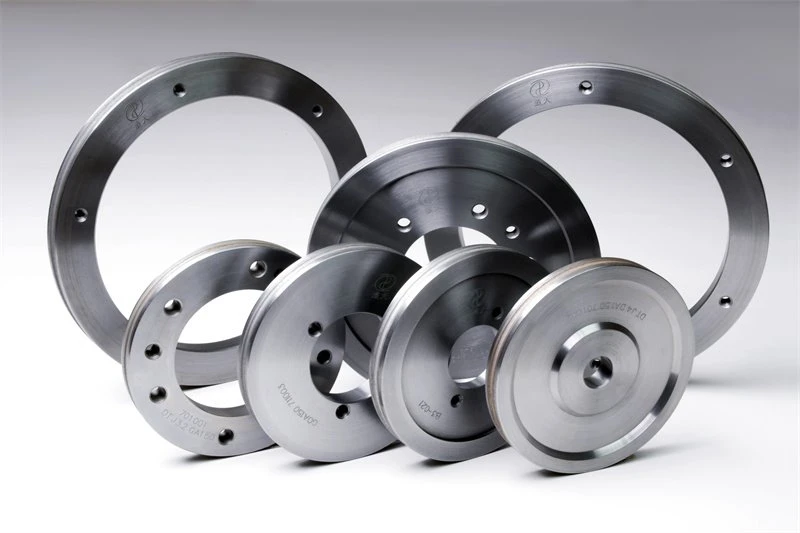

Understanding Double Groove Grinding Wheels
Double groove grinding wheels are a specialized type of abrasive tool. They feature two distinct grooves running along the circumference of the wheel. These grooves are designed to serve multiple purposes. Firstly, they help in better chip evacuation during the grinding process. When grinding, chips are generated as the abrasive grains on the wheel remove material from the workpiece. If these chips are not properly removed, they can accumulate between the wheel and the workpiece, leading to increased friction, heat generation, and potentially poor surface finish and reduced wheel life. The grooves provide channels for the chips to escape, thus maintaining a more efficient grinding operation.
Secondly, the grooves can also affect the cutting action of the wheel. They can help to break up the continuous contact between the wheel and the workpiece, which can sometimes lead to a smoother and more controlled grinding process. This is particularly important when dealing with hard materials, where precise control over the grinding force and removal rate is crucial.
Hard Materials: Characteristics and Challenges
Hard materials, such as hardened steels, ceramics, and carbides, present unique challenges during the grinding process. These materials have high hardness values, which means that they require more energy to remove material compared to softer materials. The high hardness also makes them more resistant to deformation, which can lead to increased wear on the grinding wheel.
Another challenge is the generation of heat. When grinding hard materials, a significant amount of heat is produced due to the high energy required for material removal. Excessive heat can cause thermal damage to the workpiece, such as tempering or cracking, and can also accelerate the wear of the grinding wheel. Therefore, any grinding wheel used for hard materials must be able to dissipate heat effectively and maintain its cutting ability under high - temperature conditions.
Suitability of Double Groove Grinding Wheels for Hard Materials
Chip Evacuation
One of the key advantages of double groove grinding wheels when grinding hard materials is their superior chip evacuation capabilities. As mentioned earlier, hard materials generate more and larger chips during grinding. The grooves in the double groove grinding wheels provide an efficient way to remove these chips from the grinding zone. This helps to prevent chip clogging, which can otherwise lead to increased grinding forces, heat generation, and wheel wear. By keeping the grinding zone clean, the double groove grinding wheels can maintain a more consistent cutting performance, resulting in better surface finish and dimensional accuracy of the workpiece.
Heat Dissipation
The grooves in the double groove grinding wheels also play a role in heat dissipation. The channels created by the grooves allow for better air circulation around the wheel, which helps to carry away the heat generated during grinding. This is especially important for hard materials, where heat management is critical. By reducing the temperature in the grinding zone, the double groove grinding wheels can minimize the risk of thermal damage to the workpiece and extend the life of the wheel.
Cutting Efficiency
Double groove grinding wheels can offer improved cutting efficiency when grinding hard materials. The design of the grooves can help to break up the continuous contact between the wheel and the workpiece, reducing the grinding forces required. This can lead to faster material removal rates without sacrificing the quality of the surface finish. Additionally, the double groove design can provide more cutting edges, which can further enhance the cutting efficiency.
Comparing with Other Types of Grinding Wheels
CNC Grinding Wheel
CNC Grinding Wheel is another popular option for grinding hard materials. CNC grinding wheels are designed to work with computer - numerical - control (CNC) machines, which offer high precision and automation. While CNC grinding wheels are excellent for achieving precise geometries and tight tolerances, double groove grinding wheels can provide better chip evacuation and heat dissipation. In some cases, a combination of both types of wheels may be used, with the CNC grinding wheel for the finishing operations and the double groove grinding wheel for the roughing operations.
Split Grinding Wheel
Split Grinding Wheel consists of two or more segments that are separated by a gap. These wheels are often used for grinding applications where a high degree of flexibility is required. However, when it comes to grinding hard materials, double groove grinding wheels may have an edge in terms of chip evacuation and overall stability. The continuous structure of the double groove grinding wheel can provide a more consistent cutting action, especially when dealing with hard and brittle materials.
Double Edge Grinding Wheel
Double Edge Grinding Wheel has cutting edges on both sides of the wheel. These wheels are useful for grinding operations that require access to different surfaces of the workpiece. While double edge grinding wheels offer versatility, double groove grinding wheels are more focused on efficient chip evacuation and heat management, which are crucial for hard material grinding.
Case Studies
Let's take a look at some real - world examples of using double groove grinding wheels for hard material grinding. A manufacturing company was grinding hardened steel components for the automotive industry. They initially used a standard grinding wheel, but they faced issues with chip clogging, poor surface finish, and frequent wheel dressing. After switching to our double groove grinding wheels, they noticed a significant improvement. The chips were effectively evacuated, resulting in a smoother surface finish and a reduction in the frequency of wheel dressing. The heat generated during grinding was also better managed, which extended the life of the wheels and reduced the risk of thermal damage to the components.
In another case, a ceramics manufacturer was struggling to achieve the desired surface quality when grinding ceramic parts. The high hardness and brittleness of the ceramics made it difficult to control the grinding process. By using our double groove grinding wheels, they were able to break up the continuous contact between the wheel and the workpiece, reducing the grinding forces and minimizing the risk of cracking. The grooves also helped in removing the fine ceramic chips, leading to a more consistent surface finish.
Considerations for Using Double Groove Grinding Wheels on Hard Materials
When using double groove grinding wheels for hard materials, there are several factors to consider. Firstly, the choice of abrasive material is crucial. For hard materials, abrasives such as cubic boron nitride (CBN) or diamond are often preferred due to their high hardness and wear resistance. The grain size of the abrasive also plays a role. A finer grain size may be used for finishing operations to achieve a smooth surface finish, while a coarser grain size may be more suitable for roughing operations to increase the material removal rate.
Secondly, the grinding parameters, such as the grinding speed, feed rate, and depth of cut, need to be carefully adjusted. For hard materials, a lower grinding speed may be required to prevent excessive heat generation. The feed rate and depth of cut should also be optimized to ensure efficient material removal without overloading the wheel.
Conclusion
In conclusion, double groove grinding wheels are highly suitable for grinding hard materials. Their unique design offers advantages in terms of chip evacuation, heat dissipation, and cutting efficiency. When compared to other types of grinding wheels, they can provide a more effective solution for the challenges associated with hard material grinding.
If you are in the market for high - quality double groove grinding wheels for your hard material grinding applications, I encourage you to reach out to us. We have a wide range of products to meet your specific needs, and our team of experts can provide you with professional advice and support. Whether you are a small - scale workshop or a large - scale manufacturing plant, we are committed to helping you achieve the best results in your grinding operations. Contact us today to start a fruitful business discussion.
References
- Boothroyd, G., & Knight, W. A. (2006). Fundamentals of machining and machine tools. CRC press.
- Trent, E. M., & Wright, P. K. (2000). Metal cutting. Butterworth - Heinemann.
- Rowe, W. B. (2009). Principles of modern grinding technology. Springer Science & Business Media.