

Can I use a grinding tool for appliance glass on glass with a painted surface?
Dec 09, 2025
When dealing with glass, especially glass used in appliances, the question of whether one can use a grinding tool for appliance glass on glass with a painted surface is a common and crucial one. As a supplier of Grinding Tools for Appliance Glass, I've encountered numerous inquiries regarding this topic. In this blog post, I'll delve into the scientific and practical aspects of this issue.
Understanding the Nature of Painted Glass Surfaces
Painted glass surfaces are different from regular glass. The paint layer adds an extra dimension to the glass, both in terms of its physical and chemical properties. The paint is typically applied to enhance the aesthetic appeal of the glass, protect it from certain environmental factors, or provide a functional feature such as heat reflection.
However, the paint layer is often more brittle and less resistant to abrasion than the glass itself. Different types of paint have different levels of adhesion to the glass. For example, enamel paints are fired onto the glass at high temperatures, creating a relatively strong bond. On the other hand, some acrylic or latex - based paints may have a weaker adhesion.
The Characteristics of Grinding Tools for Appliance Glass
Our Grinding Tools for Appliance Glass are designed with specific features to meet the requirements of glass processing in appliances. These tools usually have abrasive particles embedded in a matrix. The type of abrasive, such as diamond or silicon carbide, determines the cutting ability of the tool.
The grit size of the abrasive is also a crucial factor. Coarser grits are used for rapid material removal, while finer grits are employed for finishing and polishing operations. The bond strength between the abrasive particles and the matrix affects the tool's durability and performance. A strong bond ensures that the abrasive particles stay in place during the grinding process, while a well - designed bond can also release worn - out particles to expose fresh ones.
The Compatibility of Grinding Tools and Painted Glass
Using a grinding tool for appliance glass on painted glass surfaces is a complex matter that depends on several factors.
Abrasive Type and Impact on Paint
Diamond abrasives are extremely hard and efficient at cutting through glass. However, they can also cause significant damage to the paint layer. The high cutting force of diamond abrasives may chip, peel, or scratch the paint, especially if the bond strength between the paint and the glass is weak. Silicon carbide abrasives, while still abrasive, are generally less aggressive than diamond. They may be a better choice for painted glass, as they can remove material without causing as much damage to the paint layer. But this still depends on the specific properties of the paint.
Grit Size Considerations
If the grit size is too coarse, it will likely damage the paint surface. Coarse - grit tools are designed for rapid material removal, and they can easily cut through the paint and even into the glass, leaving behind an uneven and unsightly finish. For painted glass, a finer grit tool is usually recommended. A fine - grit tool can gently smooth the glass surface while minimizing the risk of paint damage. However, using a very fine grit for large - scale material removal may be extremely time - consuming.
Grinding Pressure and Speed
The pressure applied during grinding also plays a vital role. Excessive pressure can cause the paint to peel or crack, regardless of the abrasive type or grit size. It's essential to apply a consistent and moderate pressure. Similarly, the grinding speed should be carefully controlled. A high - speed grinding operation can generate a lot of heat, which can further weaken the paint and cause it to blister or peel.
Case Studies and Practical Experiences
Over the years, we've worked with many customers who have faced the challenge of grinding painted glass. In one case, a customer was trying to grind a painted glass panel for a high - end kitchen appliance. They initially used a diamond - grit grinding tool with a relatively coarse grit. The result was a disaster, with large areas of the paint peeling off. After our recommendation, they switched to a silicon carbide - based tool with a fine grit and reduced the grinding pressure and speed. This approach allowed them to achieve a smooth finish on the glass without significant paint damage.
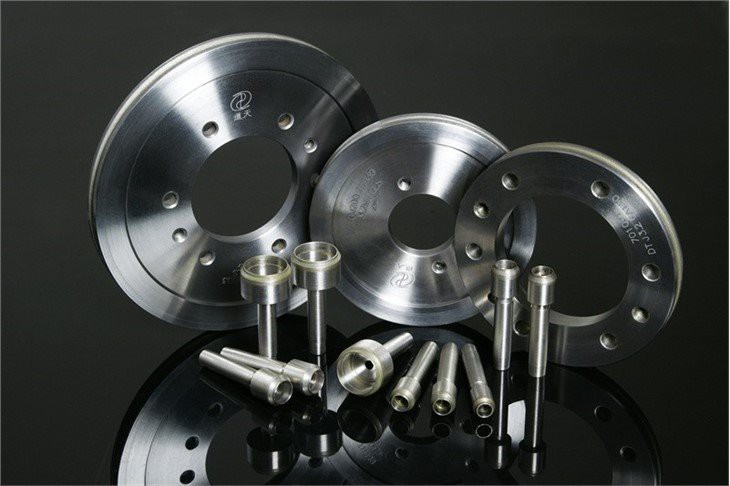

In another example, a manufacturer was dealing with a painted automotive glass component. They were hesitant to use any grinding tool on the painted surface for fear of ruining the appearance. We provided them with a special - purpose Grinding Tools for Automotive Glass that was specifically designed for delicate operations. By carefully adjusting the grinding parameters, they were able to perform minor operations on the painted glass without compromising its quality.
Alternatives to Traditional Grinding
If the painted glass surface is too delicate to be ground directly, there are some alternative methods. For example, chemical etching can be used to modify the glass surface without applying mechanical force. Chemical etching involves using a chemical solution to dissolve a thin layer of the glass. This method can be more precise and less likely to damage the paint layer. However, it requires careful handling of chemicals and strict safety precautions.
Another option is laser processing. Laser can be focused on the glass surface to remove material with high precision. It generates very little heat in the surrounding area, reducing the risk of paint damage. But laser processing equipment is often more expensive and requires specialized training to operate.
Conclusion and Call to Action
In conclusion, using a grinding tool for appliance glass on glass with a painted surface is possible but requires careful consideration of the paint type, abrasive characteristics, and grinding parameters. As a supplier of Grinding Tools for Appliance Glass, we understand the complexity of this issue and are committed to providing our customers with the best - suited solutions.
If you are facing challenges in grinding painted glass for your appliances, solar panels, or automotive applications, we are here to help. Our team of experts can provide you with detailed advice on tool selection, grinding techniques, and alternative processing methods. We also offer a wide range of Grinding Tools for Solar Glass and Grinding Tools for Automotive Glass to meet your diverse needs.
Don't hesitate to contact us to discuss your specific requirements and explore potential business opportunities.
References
- Glass Science and Technology, Volume 1: Fundamentals, by D. R. Uhlmann, N. J. Kreidl
- Handbook of Glass Properties, edited by W. A. Weyl
- Automotive Glass Technology, by R. J. Kinney