

Is it difficult to operate a machine with a three - groove grinding wheel?
Aug 15, 2025
As a supplier of Three Groove Grinding Wheels, I often encounter inquiries from customers about the operational difficulty of machines equipped with these specialized grinding wheels. In this blog post, I aim to delve into this topic, providing a comprehensive analysis based on my years of experience in the industry.
Understanding the Three Groove Grinding Wheel
Before discussing the operational difficulty, it's essential to understand the Three Groove Grinding Wheel itself. The Three Groove Grinding Wheel is a unique tool designed for specific grinding tasks. Its three - groove design allows for more efficient material removal, better coolant distribution, and improved precision in grinding operations. This type of grinding wheel is commonly used in industries such as automotive, aerospace, and precision engineering, where high - quality finishing and accurate dimensions are crucial.
Factors Affecting the Operational Difficulty
1. Machine Compatibility
One of the primary factors that determine the operational difficulty is the compatibility between the machine and the Three Groove Grinding Wheel. Different machines have different specifications, such as spindle speed, power, and mounting systems. Ensuring that the machine can support the size, speed, and load requirements of the grinding wheel is essential. For example, if the spindle speed of the machine is not within the recommended range for the Three Groove Grinding Wheel, it can lead to uneven grinding, excessive wear on the wheel, and even damage to the machine.
2. Operator Skill Level
The skill level of the operator plays a significant role in the ease of operating a machine with a Three Groove Grinding Wheel. An experienced operator who is familiar with grinding techniques, machine controls, and safety procedures will find it relatively easier to operate the machine. They know how to adjust the feed rate, depth of cut, and coolant flow to achieve the desired grinding results. On the other hand, a novice operator may struggle with these adjustments, leading to sub - optimal grinding quality and potential safety hazards.
3. Workpiece Material and Geometry
The material and geometry of the workpiece also affect the operational difficulty. Different materials have different hardness, toughness, and thermal properties, which require different grinding parameters. For instance, grinding a hard and brittle material like ceramic may require a lower feed rate and a higher coolant flow compared to grinding a soft metal like aluminum. Additionally, complex workpiece geometries, such as curved surfaces or thin - walled parts, can make the grinding process more challenging as they require precise control of the grinding wheel's movement.
4. Grinding Wheel Selection
Choosing the right Three Groove Grinding Wheel for the specific application is crucial. There are various factors to consider when selecting a grinding wheel, such as the abrasive type, grain size, bond type, and wheel grade. The abrasive type determines the cutting ability of the wheel, while the grain size affects the surface finish. The bond type holds the abrasive grains together, and the wheel grade indicates its hardness. Selecting an inappropriate grinding wheel can result in poor grinding performance, increased wheel wear, and higher operational costs.
Tips to Simplify the Operation
1. Machine Training and Maintenance
Providing comprehensive training to operators is essential to ensure they have the necessary skills and knowledge to operate the machine with a Three Groove Grinding Wheel safely and efficiently. Training should cover machine controls, grinding techniques, safety procedures, and troubleshooting. Regular machine maintenance is also crucial to keep the machine in good working condition. This includes checking the spindle alignment, lubricating moving parts, and replacing worn - out components.
2. Proper Workpiece Preparation
Proper workpiece preparation can significantly simplify the grinding process. This includes cleaning the workpiece to remove any contaminants, ensuring it is properly fixtured to prevent movement during grinding, and performing any necessary pre - machining operations to achieve the desired initial shape and dimensions.
3. Optimal Grinding Parameters
Determining the optimal grinding parameters based on the workpiece material, geometry, and the Three Groove Grinding Wheel characteristics is crucial. This can be done through trial - and - error testing or by referring to the grinding wheel manufacturer's recommendations. Adjusting the feed rate, depth of cut, and coolant flow can help achieve the desired grinding quality while minimizing wheel wear and heat generation.
4. Use of Advanced Technologies
Advancements in grinding technology have made it easier to operate machines with Three Groove Grinding Wheels. For example, computer - numerical - control (CNC) systems can provide precise control of the grinding wheel's movement, allowing for more complex grinding operations with high accuracy. Additionally, sensors and monitoring systems can be used to detect any abnormal conditions during grinding, such as excessive wheel wear or overheating, and alert the operator in a timely manner.
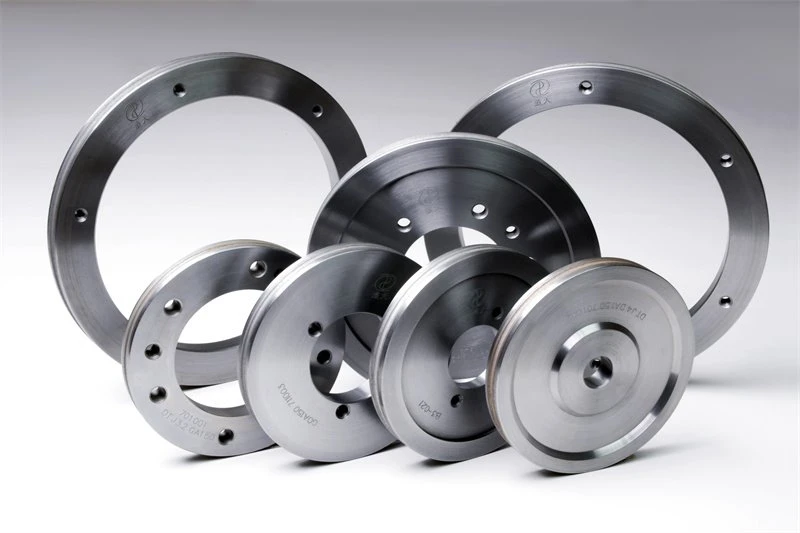

Comparing with Other Types of Grinding Wheels
To better understand the operational difficulty of a machine with a Three Groove Grinding Wheel, it's useful to compare it with other types of grinding wheels. For example, the Diamond Grinding Wheel for Thin Glass is specifically designed for grinding thin glass materials. It requires extremely precise control of the grinding parameters due to the fragility of the glass. The operational difficulty mainly lies in preventing breakage and achieving a smooth surface finish.
On the other hand, CNC Grinding Wheels are used in CNC grinding machines, which offer high - precision and automated grinding operations. While the initial setup and programming of the CNC machine may be complex, once configured correctly, the operation can be relatively straightforward. Compared to these, the Three Groove Grinding Wheel offers a balance between the complexity of operation and the versatility in grinding different materials and geometries.
Conclusion
In conclusion, operating a machine with a Three Groove Grinding Wheel is not inherently difficult, but it does require careful consideration of several factors. Machine compatibility, operator skill level, workpiece material and geometry, and grinding wheel selection all play important roles in determining the ease of operation. By following the tips mentioned above, such as providing proper training, ensuring optimal grinding parameters, and using advanced technologies, the operational difficulty can be significantly reduced.
If you are interested in learning more about our Three Groove Grinding Wheels or have any questions regarding their operation, we encourage you to contact us for a detailed discussion. Our team of experts is ready to assist you in finding the best grinding solutions for your specific needs.
References
- "Grinding Technology: Theory and Applications of Machining with Abrasives" by Stephen Malkin
- "Handbook of Machining with Grinding Wheels" by Peter K. Wright and David A. Batchelor