

What is the material removal rate of grinding tools for flat glass?
Jan 08, 2026
Hey there! As a supplier of Grinding Tools for Flat Glass, I often get asked about the material removal rate of our grinding tools. So, I thought I'd dive into this topic and share what I know.
Understanding the Material Removal Rate
The material removal rate (MRR) is a crucial metric when it comes to the performance of grinding tools. In simple terms, it refers to the amount of material that is removed from the workpiece during the grinding process per unit of time. For flat glass, a high MRR means that you can grind a larger surface area or achieve a desired thickness more quickly.
There are several factors that influence the MRR of grinding tools for flat glass. Let's take a closer look at them.
Factors Affecting the Material Removal Rate
1. Abrasive Grit Size
The grit size of the abrasive on the grinding tool plays a significant role in determining the MRR. Larger grit sizes generally result in a higher MRR because they can remove larger chips of glass material. However, using a tool with too large a grit size can also lead to a rougher surface finish. So, it's important to find a balance based on your specific requirements.
For example, if you're looking to quickly remove a large amount of material during the initial grinding stage, a coarse - grit grinding tool might be the way to go. But if you need a smooth finish after the rough grinding, you'll want to switch to a finer - grit tool.
2. Grinding Wheel Speed
The rotational speed of the grinding wheel affects the MRR as well. Generally, a higher wheel speed can increase the MRR. When the wheel rotates faster, the abrasive grains on the wheel come into contact with the glass more frequently, allowing for more material to be removed.
But again, there's a catch. Increasing the wheel speed too much can cause issues such as overheating of the glass, which can lead to cracking or other forms of damage. So, it's essential to operate within the recommended speed range for your particular grinding tool and the type of glass you're working with.

3. Feed Rate
The feed rate refers to how fast the glass is moved across the grinding wheel. A higher feed rate can increase the MRR, as more of the glass surface is exposed to the abrasive action of the wheel in a given time. However, if the feed rate is too high, the grinding tool may not be able to effectively remove the material, resulting in a poor surface finish or even damage to the tool.
4. Coolant and Lubrication
Using a coolant or lubricant during the grinding process can have a positive impact on the MRR. Coolants help to dissipate heat generated during grinding, which can prevent the glass from overheating and cracking. They also reduce friction between the grinding tool and the glass, allowing the abrasive grains to work more efficiently. This, in turn, can increase the MRR and improve the overall quality of the grinding operation.
Measuring the Material Removal Rate
Measuring the MRR for grinding tools on flat glass is relatively straightforward. You can calculate it by measuring the mass or volume of the glass removed before and after the grinding process and dividing it by the time taken for the grinding operation.
For example, if you start with a flat glass piece that weighs 1000 grams and after grinding for 10 minutes, it weighs 950 grams, then the mass of the material removed is 50 grams. The MRR in this case would be 5 grams per minute.
If you prefer to measure the volume of the removed material, you can use calipers or other measuring devices to measure the change in thickness or dimensions of the glass and then calculate the volume.
The Importance of Material Removal Rate in the Flat Glass Industry
In the flat glass industry, a high MRR can translate into significant cost savings and increased productivity. Faster grinding means that more glass products can be processed in a shorter amount of time, which is especially important for large - scale manufacturers.
Moreover, a consistent and predictable MRR is crucial for maintaining the quality of the finished glass products. You can ensure that each piece of glass meets the desired specifications in terms of thickness, surface finish, and other parameters.
Our Grinding Tools and Material Removal Rate
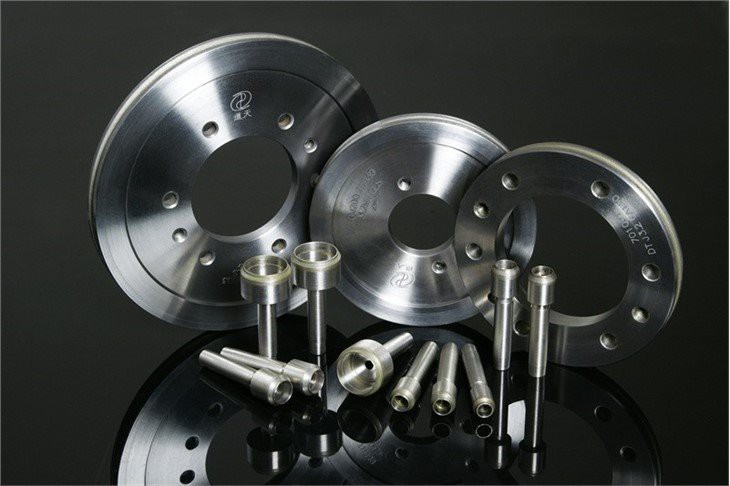
As a supplier of Grinding Tools for Flat Glass, we've spent a lot of time and effort in developing tools that offer an optimal MRR. Our grinding tools are designed with high - quality abrasives and advanced manufacturing techniques to ensure efficient material removal.
We also offer a variety of grit sizes and tool configurations to meet different customer needs. Whether you're looking for a tool for rough grinding or a finishing touch, we've got you covered.
In addition to flat glass, we also supply Grinding Tools for Automotive Glass and Grinding Tools for Appliance Glass. Each of these applications has its own specific requirements, and our tools are engineered to provide the best performance in terms of MRR and surface finish.
Conclusion
The material removal rate of grinding tools for flat glass is affected by several factors, including abrasive grit size, grinding wheel speed, feed rate, and coolant use. Understanding these factors and how they interact can help you optimize your grinding operations, improve productivity, and ensure high - quality finished products.
If you're in the market for grinding tools that offer a great MRR and reliable performance, look no further. We're here to provide you with the best solutions for your flat glass grinding needs. Don't hesitate to reach out if you have any questions or if you're interested in discussing your procurement requirements. Let's work together to take your glass processing operations to the next level.
References
- "Advanced Grinding Technology" by J. D. Webster.
- "Glass Processing Handbook" by various industry experts.