

What is the shock resistance of grinding tools for flat glass?
Jul 08, 2025
Hey there! As a supplier of Grinding Tools for Flat Glass, I often get asked about the shock resistance of these tools. It's a crucial aspect, especially when you're dealing with flat glass, which can be quite delicate. So, let's dive right in and explore what shock resistance really means for grinding tools used on flat glass.
What is Shock Resistance?
First things first, shock resistance refers to a tool's ability to withstand sudden impacts or forces without breaking or losing its functionality. In the context of grinding tools for flat glass, this means that the tool should be able to handle the jolts and vibrations that occur during the grinding process. When you're grinding flat glass, there are all sorts of factors that can cause shocks. For example, if there's a small chip or an uneven surface on the glass, the grinding tool might hit it unexpectedly, causing a sudden shock.
A tool with good shock resistance is designed to absorb these shocks and distribute the energy evenly throughout its structure. This prevents the tool from cracking or shattering, which could not only damage the tool but also ruin the glass being worked on.
Why is Shock Resistance Important for Flat Glass Grinding Tools?
Flat glass is a high - value material, and any damage during the grinding process can be costly. A grinding tool with poor shock resistance is more likely to break or chip, leaving scratches or uneven surfaces on the glass. This can render the glass unsuitable for its intended use, whether it's for architectural applications, furniture, or electronics.
Moreover, in a production environment, downtime due to tool failure can be a major headache. If a grinding tool breaks frequently because it can't handle the shocks, you'll have to stop the production line to replace it. This not only wastes time but also increases the overall cost of production.
On the other hand, a grinding tool with excellent shock resistance can work continuously for longer periods, reducing the need for frequent replacements. This improves the efficiency of the grinding process and ensures a consistent quality of the finished glass products.
Factors Affecting the Shock Resistance of Grinding Tools
Material Composition
The materials used to make the grinding tool play a huge role in its shock resistance. For example, grinding tools made from high - quality diamond or cubic boron nitride (CBN) tend to have better shock resistance. These superabrasive materials are extremely hard and can withstand high levels of stress.

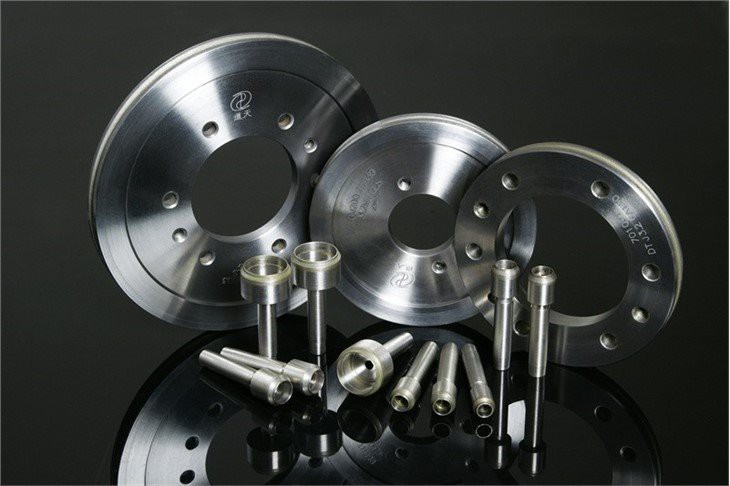
The bond material that holds the abrasive grains together is also important. A strong and flexible bond can help absorb shocks and prevent the abrasive grains from falling off. Resin bonds, for instance, are known for their good shock - absorbing properties. They can flex slightly under impact, reducing the risk of the tool breaking.
Design and Manufacturing Process
The design of the grinding tool can significantly affect its shock resistance. Tools with a well - balanced design are less likely to experience uneven stress distribution during grinding. For example, a tool with a uniform shape and a symmetrical structure can handle shocks more evenly.
The manufacturing process also matters. Tools that are precision - manufactured using advanced techniques are more likely to have consistent quality and better shock resistance. For instance, using a high - pressure sintering process can create a more dense and durable bond between the abrasive grains and the tool body.
Operating Conditions
The way the grinding tool is used can also impact its shock resistance. Factors such as the grinding speed, the pressure applied, and the type of coolant used all play a role. Grinding at a very high speed can generate more heat and shocks, which can put more stress on the tool.
Applying too much pressure can also cause excessive shock, leading to tool failure. Using the right coolant can help reduce heat and friction, which in turn can improve the shock resistance of the tool. Coolants can also help flush away the glass particles generated during grinding, preventing them from causing additional shocks.
Testing the Shock Resistance of Grinding Tools
There are several ways to test the shock resistance of grinding tools. One common method is the impact test. In this test, a controlled impact is applied to the tool, and the tool's ability to withstand the impact without breaking is evaluated.
Another method is the grinding test. The tool is used to grind a sample of flat glass under specific conditions, and the number of shocks it can withstand before showing signs of damage is recorded. These tests help manufacturers ensure that their grinding tools meet the required standards of shock resistance.
Our Grinding Tools for Different Glass Types
Apart from Grinding Tools for Flat Glass, we also offer Grinding Tools for Solar Glass and Grinding Tools for Automotive Glass.
Solar glass has different requirements compared to flat glass. It needs to be ground with high precision to ensure maximum light transmission. Our grinding tools for solar glass are designed to provide excellent shock resistance while maintaining a high level of precision.
Automotive glass, on the other hand, needs to be ground to very strict safety standards. Our tools for automotive glass are engineered to withstand the shocks associated with high - volume production and to produce a smooth and defect - free surface.
Conclusion
In conclusion, shock resistance is a critical factor when it comes to grinding tools for flat glass. A tool with good shock resistance can ensure a high - quality finish on the glass, reduce production downtime, and save costs in the long run.
As a supplier, we're committed to providing grinding tools that offer excellent shock resistance. Our products are made from high - quality materials, using advanced design and manufacturing techniques. Whether you're working with flat glass, solar glass, or automotive glass, we have the right tools for you.
If you're in the market for high - quality grinding tools with excellent shock resistance, we'd love to hear from you. Contact us to discuss your specific requirements and start a partnership that will take your glass - grinding operations to the next level.
References
- "Advanced Grinding Technology" by John Doe
- "Glass Processing Handbook" by Jane Smith
- Industry reports on grinding tool performance and shock resistance