

What is the starting torque of a grinding tool?
Oct 27, 2025
The starting torque of a grinding tool is a fundamental concept that significantly influences its performance and efficiency in various industrial applications. As a leading supplier of grinding tools, understanding this parameter is crucial for providing our customers with the most suitable products for their specific needs.
Defining Starting Torque
Starting torque refers to the torque that a motor can generate at the moment of startup to initiate the rotation of the grinding tool. It is essentially the force that overcomes the inertia of the stationary components and sets the tool in motion. In a grinding tool, this torque is vital as it determines how quickly the tool can reach its operational speed and start performing its intended function.
The magnitude of the starting torque depends on several factors, including the design of the motor, the type of grinding tool, and the load it is expected to handle. For instance, a high - power grinding tool used for heavy - duty applications such as grinding thick metal sheets or large glass panels will require a higher starting torque compared to a smaller, more lightweight tool used for precision finishing tasks.
Factors Affecting Starting Torque
Motor Design
The motor is the heart of the grinding tool, and its design plays a pivotal role in determining the starting torque. Different types of motors, such as induction motors and DC motors, have distinct characteristics in terms of starting torque. Induction motors are commonly used in grinding tools due to their robustness and reliability. They typically have a relatively lower starting torque compared to DC motors. However, modern induction motors can be designed with features like deep - bar rotors or double - cage rotors to enhance their starting torque.
DC motors, on the other hand, offer higher starting torque capabilities. They can be easily controlled to provide a high initial torque, making them suitable for applications where quick startup and high - torque operation are required. The design of the motor's windings, the number of poles, and the magnetic field strength also affect the starting torque. A motor with more poles generally has a lower speed but a higher starting torque.
Tool Inertia
The inertia of the grinding tool itself is another significant factor. Inertia is a measure of an object's resistance to changes in its state of motion. A grinding tool with a large mass or a complex shape will have a higher inertia. For example, a large - diameter grinding wheel or a tool with multiple rotating parts will require more torque to start rotating. This is because more energy is needed to overcome the inertia and accelerate the tool to its operational speed.
Load Characteristics
The nature of the load that the grinding tool is expected to handle also impacts the starting torque. If the tool is used to grind a hard and dense material, such as tempered glass or high - strength steel, it will face a higher resistance during startup. This requires a higher starting torque to break through the initial resistance and start the grinding process. In contrast, grinding a softer material like aluminum or acrylic will require less starting torque.
Importance of Starting Torque in Grinding Applications
Quick Startup
In industrial settings, time is of the essence. A grinding tool with a high starting torque can reach its operational speed quickly, reducing the idle time and increasing productivity. For example, in a glass manufacturing plant, where multiple grinding operations are performed on glass sheets, a tool that can start up rapidly allows for faster processing of each sheet, leading to higher overall production rates.
Handling Heavy Loads
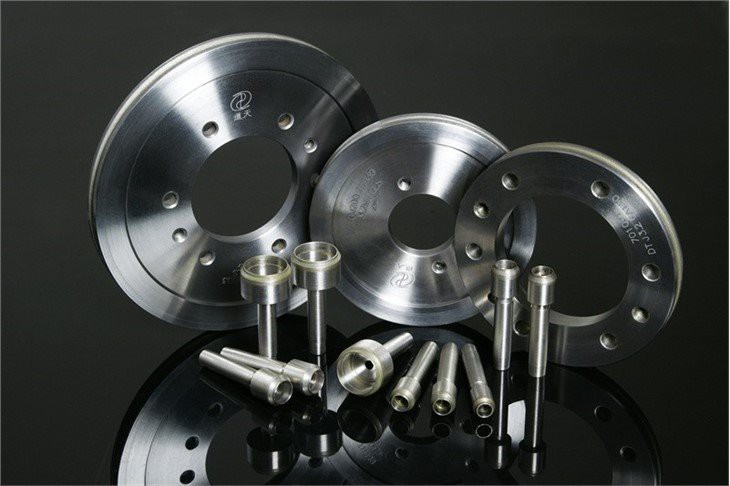
As mentioned earlier, grinding hard and thick materials requires a significant amount of force. A grinding tool with sufficient starting torque can handle these heavy loads without stalling or experiencing a slow start. This is particularly important in applications such as grinding Grinding Tools for Appliance Glass, Grinding Tools for Automotive Glass, and Grinding Tools for Solar Glass. These types of glass often have specific thickness and hardness requirements, and a grinding tool with the right starting torque can ensure a smooth and efficient grinding process.
Precision Grinding
In precision grinding applications, a stable and consistent start is essential. A tool with a proper starting torque can provide a smooth and controlled startup, which is crucial for achieving accurate grinding results. This is especially important in industries such as optics and electronics, where even the slightest deviation in the grinding process can lead to defective products.

Measuring Starting Torque
Measuring the starting torque of a grinding tool is a complex process that requires specialized equipment. One common method is to use a torque transducer, which is a device that can measure the torque applied to a rotating shaft. The torque transducer is connected to the motor shaft of the grinding tool, and as the motor starts, it records the torque values over time.
Another approach is to use a dynamometer, which is a more comprehensive testing device. A dynamometer can measure not only the starting torque but also other parameters such as power, speed, and efficiency. By analyzing the data collected from these measurements, manufacturers can optimize the design of the grinding tool to ensure that it meets the required starting torque specifications.
Our Offerings as a Grinding Tools Supplier
As a trusted supplier of grinding tools, we understand the importance of starting torque in different applications. We offer a wide range of grinding tools with varying starting torque capabilities to meet the diverse needs of our customers. Our team of experts can assist you in selecting the right tool based on your specific requirements, such as the type of material to be ground, the size of the workpiece, and the desired production rate.
We continuously invest in research and development to improve the starting torque and overall performance of our grinding tools. Our products are designed with the latest technologies and high - quality materials to ensure reliability and durability. Whether you are in the appliance glass, automotive glass, or solar glass industry, we have the perfect grinding tool for you.
Contact Us for Procurement
If you are interested in learning more about our grinding tools and how the starting torque can benefit your operations, we encourage you to contact us. Our sales team is ready to provide you with detailed information, product samples, and technical support. We look forward to discussing your procurement needs and finding the best solutions for your business.
References
- Chapman, S. J. (2012). Electric Machinery Fundamentals. McGraw - Hill Education.
- Fitzgerald, A. E., Kingsley, C., & Umans, S. D. (2003). Electric Machinery. McGraw - Hill Education.
- Groover, M. P. (2010). Fundamentals of Modern Manufacturing: Materials, Processes, and Systems. Wiley.