

Do Bando Drill Bits have a fast cutting speed?
May 12, 2025
In the realm of drilling operations, the cutting speed of drill bits is a critical factor that directly impacts productivity, efficiency, and overall cost - effectiveness. As a supplier of Bando Drill Bits, I am often asked the question: "Do Bando Drill Bits have a fast cutting speed?" In this blog post, I will delve into the science behind drill bit cutting speed and explain why Bando Drill Bits are renowned for their rapid cutting capabilities.
Understanding Cutting Speed
Before we can determine whether Bando Drill Bits have a fast cutting speed, it's essential to understand what cutting speed means. Cutting speed, often denoted as surface feet per minute (SFM) in imperial units or meters per minute (m/min) in metric units, refers to the speed at which the cutting edge of the drill bit moves across the workpiece surface. It is a function of the drill bit's diameter and the rotational speed (RPM) of the drilling machine.

The formula for calculating cutting speed is as follows: [SFM=\frac{\pi\times D\times RPM}{12}] where (D) is the drill bit diameter in inches and (RPM) is the rotational speed of the drill. In the metric system, the formula is (m/min=\frac{\pi\times D\times RPM}{1000}), where (D) is in millimeters.
A higher cutting speed generally translates to faster material removal, which can significantly reduce the time required to complete a drilling operation. However, it's important to note that cutting speed is not the only factor influencing drilling efficiency. Other factors such as feed rate, drill bit geometry, and the material being drilled also play crucial roles.
Factors Affecting the Cutting Speed of Drill Bits
1. Material of the Drill Bit
The material of the drill bit has a profound impact on its cutting speed. Bando Drill Bits are typically made from high - quality materials such as carbide, high - speed steel (HSS), or cobalt - alloyed high - speed steel. Carbide drill bits, for instance, are extremely hard and wear - resistant. They can withstand high temperatures generated during the drilling process, allowing for higher cutting speeds compared to HSS drill bits. This is because carbide can maintain its hardness and cutting edge integrity at elevated temperatures, which is essential when drilling at high speeds.
2. Drill Bit Geometry
The geometry of a drill bit, including the point angle, helix angle, and flute design, affects its cutting performance. Bando Drill Bits are engineered with optimized geometries. A sharp point angle reduces the thrust force required to penetrate the material, enabling faster entry into the workpiece. The helix angle, on the other hand, influences chip evacuation. A larger helix angle helps in removing chips more efficiently, preventing chip clogging and allowing the drill bit to cut continuously at a higher speed. The flute design also plays a role in chip removal and coolant flow, which is crucial for maintaining a high cutting speed.
3. Coating
Many Bando Drill Bits are coated with advanced materials such as titanium nitride (TiN), titanium aluminum nitride (TiAlN), or diamond - like carbon (DLC). These coatings provide several benefits. They reduce friction between the drill bit and the workpiece, which in turn reduces heat generation. Lower heat levels allow for higher cutting speeds without sacrificing the drill bit's performance or lifespan. Additionally, the coatings enhance the wear resistance of the drill bit, ensuring that the cutting edge remains sharp for longer periods, even at high cutting speeds.
Bando Drill Bits and Fast Cutting Speed
Performance in Different Materials
Bando Drill Bits are designed to perform exceptionally well in a wide range of materials, including metals, plastics, and glass. When drilling metals such as aluminum, brass, or steel, Bando's carbide drill bits can achieve significantly higher cutting speeds compared to standard drill bits. For example, in aluminum, Bando carbide drill bits can operate at cutting speeds of up to 300 SFM, while traditional HSS drill bits may be limited to around 100 - 150 SFM.
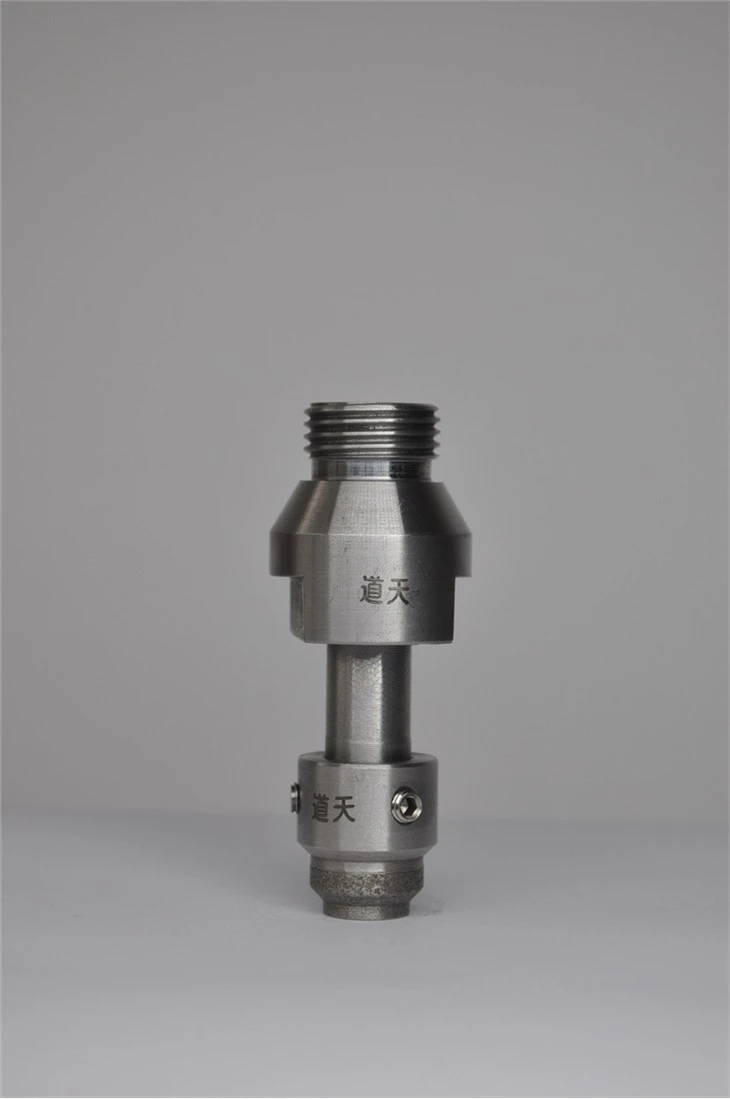
In the case of glass, Bando offers specialized drill bits such as the Threaded Split Drill Bit for Automotive Glass, Integrated Drill Bit for Automotive Glass, and Split Drill Bit for Automotive Glass. These drill bits are engineered with unique geometries and abrasive materials to cut through glass quickly and cleanly. They can achieve relatively high cutting speeds while minimizing the risk of glass breakage, which is a common problem when drilling this brittle material.
Real - World Applications
In real - world manufacturing and construction applications, the fast cutting speed of Bando Drill Bits translates into significant time and cost savings. For example, in automotive manufacturing, where thousands of holes need to be drilled in various components, using Bando Drill Bits can reduce the overall production time. The ability to drill holes faster means that more parts can be produced in a given time frame, increasing the productivity of the manufacturing line.
In the construction industry, when drilling holes for plumbing or electrical installations, the fast cutting speed of Bando Drill Bits allows contractors to complete jobs more quickly. This not only saves labor costs but also enables them to take on more projects, increasing their overall revenue.
Comparing Bando Drill Bits with Competitors
When compared to other drill bit brands on the market, Bando Drill Bits often outperform in terms of cutting speed. This is due to the company's commitment to research and development, using the latest materials and manufacturing techniques. Competitor drill bits may be made from lower - quality materials or have less optimized geometries, which limit their cutting speeds.
For instance, some generic HSS drill bits may not be able to withstand the high temperatures generated at high cutting speeds, leading to rapid wear and a decrease in cutting performance. In contrast, Bando's carbide - tipped or coated drill bits can maintain their cutting edge and operate at higher speeds for longer periods, providing a more efficient and cost - effective drilling solution.
How to Maximize the Cutting Speed of Bando Drill Bits
To fully harness the fast cutting speed capabilities of Bando Drill Bits, it's important to follow some best practices: 1. Select the Right Drill Bit: Choose the appropriate Bando Drill Bit based on the material you are drilling. Different materials require different drill bit materials, geometries, and coatings for optimal performance. 2. Optimize the RPM: Set the rotational speed of the drilling machine according to the drill bit diameter and the material being drilled. Refer to the manufacturer's recommendations for the ideal RPM range. 3. Control the Feed Rate: The feed rate, which is the rate at which the drill bit advances into the workpiece, should be adjusted properly. A too - low feed rate may result in inefficient cutting, while a too - high feed rate can cause the drill bit to break or wear out prematurely. 4. Use Coolant: Using a suitable coolant can significantly improve the cutting speed and the lifespan of the drill bit. Coolant helps in reducing heat, flushing away chips, and lubricating the cutting edge.
Conclusion
In conclusion, Bando Drill Bits are indeed known for their fast cutting speed. Thanks to their high - quality materials, optimized geometries, and advanced coatings, they can achieve rapid material removal in a variety of materials and applications. Whether you are in the automotive, construction, or manufacturing industry, using Bando Drill Bits can help you increase productivity, reduce costs, and improve the overall quality of your drilling operations.
If you are interested in learning more about our Bando Drill Bits or would like to discuss your specific drilling needs, we invite you to contact us for procurement and further discussions. We are committed to providing you with the best drilling solutions tailored to your requirements.
References
- Kalpakjian, S., & Schmid, S. R. (2009). Manufacturing Engineering and Technology. Pearson Prentice Hall.
- Trent, E. M., & Wright, P. K. (2000). Metal Cutting. Butterworth - Heinemann.