

How does the abrasive concentration in a glassware grinding wheel affect the grinding?
Sep 01, 2025
As a supplier of Glassware Grinding Wheels, I've witnessed firsthand how various factors can influence the grinding process. One crucial element that significantly impacts the grinding of glassware is the abrasive concentration in the grinding wheel. In this blog, I'll delve into how the abrasive concentration in a glassware grinding wheel affects the grinding process, sharing insights based on my years of experience in the industry.
Understanding Abrasive Concentration
Abrasive concentration refers to the amount of abrasive material present in a given volume of the grinding wheel. It is typically expressed as a percentage. For instance, a grinding wheel with a high abrasive concentration will have more abrasive particles per unit volume compared to one with a lower concentration. The abrasive particles are responsible for cutting and removing material from the glassware surface during the grinding process.
Impact on Material Removal Rate
One of the most noticeable effects of abrasive concentration on grinding is the material removal rate. A higher abrasive concentration generally leads to a faster material removal rate. When there are more abrasive particles in the grinding wheel, more cutting edges are available to interact with the glassware surface. This results in a greater amount of material being removed with each pass of the wheel.

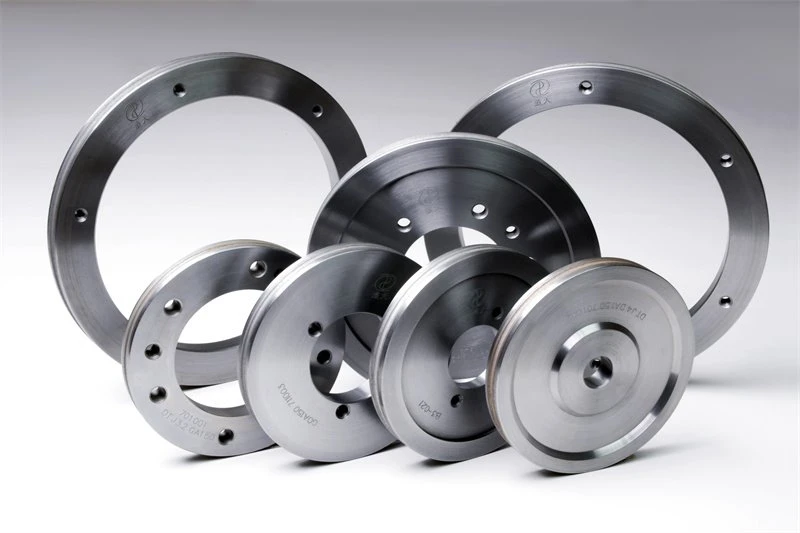
For example, in a high - volume glassware manufacturing setting where efficiency is key, using a grinding wheel with a high abrasive concentration can significantly reduce the processing time. Workers can achieve the desired shape and finish of the glassware more quickly, increasing overall productivity. However, it's important to note that an extremely high abrasive concentration may also lead to excessive material removal, potentially causing damage to the glassware or producing an uneven surface finish.
Surface Finish Quality
The abrasive concentration also plays a vital role in determining the surface finish quality of the glassware. A lower abrasive concentration often results in a smoother surface finish. With fewer abrasive particles, each particle has more space to cut and interact with the glass surface. This allows for a more controlled and precise cutting action, reducing the likelihood of surface irregularities such as scratches and roughness.
In applications where a high - quality surface finish is required, such as in the production of luxury glassware or optical lenses, a grinding wheel with a lower abrasive concentration is often preferred. The slower material removal rate associated with lower abrasive concentrations may be acceptable in these cases, as the focus is on achieving a flawless surface.
Wheel Wear and Durability
Another aspect affected by abrasive concentration is the wear and durability of the grinding wheel. A grinding wheel with a high abrasive concentration may experience more rapid wear. The increased number of abrasive particles means that there are more cutting edges in contact with the glassware, which can lead to greater friction and heat generation. This, in turn, can cause the abrasive particles to break down or become dislodged from the wheel more quickly.
On the other hand, a grinding wheel with a lower abrasive concentration may have a longer lifespan. Since there are fewer abrasive particles, the wear on each particle is more evenly distributed, and the wheel is less likely to experience premature failure. However, it's important to balance the wheel's durability with the desired material removal rate and surface finish.
Heat Generation
Heat generation is a critical factor in the grinding process, especially when working with glassware. Excessive heat can cause thermal stress in the glass, leading to cracking or deformation. The abrasive concentration in the grinding wheel can influence the amount of heat generated during grinding.
A high - abrasive - concentration wheel tends to generate more heat due to the increased number of cutting edges and the higher friction between the wheel and the glassware. To mitigate this, proper cooling and lubrication systems are essential when using high - concentration grinding wheels. In contrast, a lower - abrasive - concentration wheel generates less heat, reducing the risk of thermal damage to the glassware.
Choosing the Right Abrasive Concentration
Selecting the appropriate abrasive concentration for a glassware grinding wheel depends on several factors. These include the type of glassware being processed, the desired surface finish, the required material removal rate, and the available equipment.
For general - purpose glassware grinding where a balance between material removal rate and surface finish is needed, a medium - abrasive - concentration wheel may be the best choice. If high - speed material removal is the priority, such as in mass - production settings, a high - abrasive - concentration wheel can be used, but with careful monitoring to prevent damage to the glassware. For applications demanding a superior surface finish, a low - abrasive - concentration wheel should be selected.
Our Product Range
As a supplier of Glassware Grinding Wheels, we offer a wide range of products with different abrasive concentrations to meet the diverse needs of our customers. Our CNC Grinding Wheel is designed for precision grinding operations, available in various abrasive concentrations to suit different CNC machining requirements. The Double Edge Grinding Wheel provides enhanced versatility, allowing for efficient grinding on both sides of the glassware. And our Bando Grinding Wheel is known for its high - quality performance and durability, with options for different abrasive concentrations to achieve the best results.
Conclusion
In conclusion, the abrasive concentration in a glassware grinding wheel has a profound impact on the grinding process. It affects the material removal rate, surface finish quality, wheel wear, and heat generation. By understanding these relationships, manufacturers can make informed decisions when selecting the appropriate grinding wheel for their specific applications.
If you're in the market for high - quality Glassware Grinding Wheels and need expert advice on choosing the right abrasive concentration for your needs, don't hesitate to contact us. Our team of experienced professionals is ready to assist you in finding the perfect solution for your glassware grinding requirements. We can provide detailed product information, offer technical support, and even conduct on - site demonstrations to ensure that you get the best results. Let's work together to achieve optimal grinding performance and high - quality glassware production.
References
- "Grinding Technology: Theory and Applications of Machining with Abrasives" by Stephen M. C. Yip
- "Handbook of Glass Manufacturing" by Peter H. Doremus
- Industry research reports on glassware grinding processes and grinding wheel performance.