

What is the difference between internal and external grinding with a side window grinding wheel?
Sep 02, 2025
Hey there! As a supplier of side window grinding wheels, I've had my fair share of experiences with different types of grinding operations. One question that often pops up is: "What's the difference between internal and external grinding with a side window grinding wheel?" Well, let's dive right in and break it down.
Internal Grinding
Internal grinding, also known as bore grinding, is all about grinding the inner surfaces of holes or bores. When we use a side window grinding wheel for internal grinding, we're looking to achieve a precise finish on the inside of a workpiece. This process is crucial in industries where high - precision components are needed, like the automotive and aerospace sectors.
One of the main challenges in internal grinding is the limited space. The side window grinding wheel has to be carefully selected to fit inside the bore. It needs to have the right diameter and width to reach all the areas that need to be ground. Also, because the grinding is happening inside a confined space, heat dissipation can be a bit of an issue. The friction between the wheel and the workpiece generates heat, and if it's not managed properly, it can lead to thermal damage to the workpiece.
We often use Diamond Grinding Wheel for Thin Glass for internal grinding of thin - walled components. These wheels are designed to provide a high - quality finish while minimizing the risk of cracking or chipping the thin glass. The diamond abrasive particles on the wheel are very sharp and can remove material quickly and accurately.
Another important aspect of internal grinding is the control of the grinding pressure. Since we're working on the inside of a bore, it's easy to apply too much pressure, which can cause the workpiece to deform. So, we need to use advanced grinding machines with precise pressure control systems. These machines can adjust the pressure based on the material being ground and the desired finish.

External Grinding
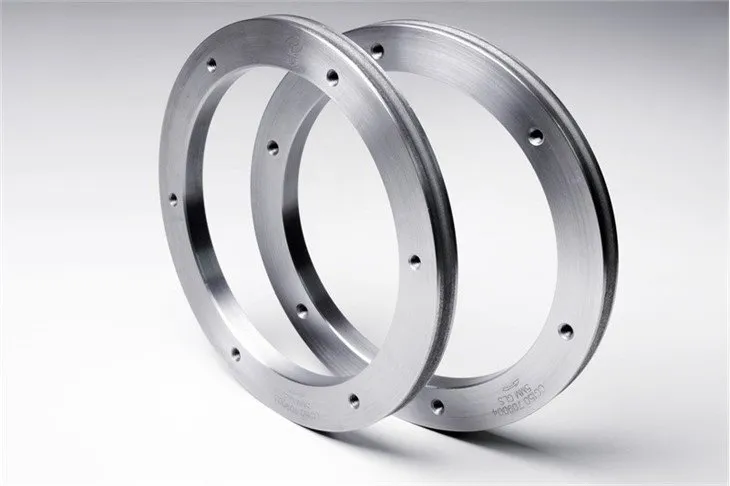
External grinding, on the other hand, focuses on grinding the outer surfaces of workpieces. This could be the outside diameter of a shaft, the flat surface of a plate, or any other external part. When using a side window grinding wheel for external grinding, we have more flexibility compared to internal grinding.
We can choose a larger wheel diameter, which generally means a higher material removal rate. The side window design allows for better visibility of the grinding area, which is a huge advantage when we need to monitor the grinding process closely. For example, when grinding a long shaft, we can easily see if the surface finish is uniform along the length of the shaft.
External grinding is widely used in the manufacturing of various machinery parts. For instance, in the production of appliance glass, we often use Diamond Grinding Wheel for Appliance Glass. These wheels are specifically designed to handle the unique properties of appliance glass, such as its hardness and brittleness. They can provide a smooth and scratch - free finish, which is essential for the appearance and functionality of the final product.
One of the benefits of external grinding is that heat dissipation is generally easier. Since the grinding surface is exposed to the air, the heat can dissipate more quickly compared to internal grinding. However, we still need to use coolant to keep the temperature under control and to prevent the abrasive particles on the wheel from getting dull too quickly.
Key Differences
- Space Constraints: As mentioned earlier, internal grinding has limited space, which restricts the size of the grinding wheel and makes it more challenging to access all areas of the workpiece. External grinding, on the other hand, has no such space limitations.
- Heat Dissipation: Internal grinding has a harder time dissipating heat due to the confined space, while external grinding can take advantage of the open environment for better heat dissipation.
- Wheel Selection: The choice of the side window grinding wheel is different for internal and external grinding. For internal grinding, we need a wheel that can fit inside the bore, while for external grinding, we can select a wheel based on the size and shape of the external surface and the desired material removal rate.
- Pressure Control: In internal grinding, precise pressure control is crucial to avoid workpiece deformation. In external grinding, while pressure control is still important, the risk of deformation is generally lower.
Double Groove Grinding Wheel in Grinding
When it comes to both internal and external grinding, Double Groove Grinding Wheel can be a great option. These wheels have two grooves that can help with better coolant flow and chip removal. In internal grinding, the grooves can improve the heat dissipation and prevent chips from getting stuck inside the bore. In external grinding, they can enhance the surface finish by ensuring a more even distribution of the grinding forces.
Conclusion
So, there you have it! The difference between internal and external grinding with a side window grinding wheel is significant, and each process has its own set of challenges and advantages. Whether you're working on the inside of a bore or the outside of a workpiece, choosing the right grinding wheel and having the proper grinding techniques are crucial for achieving the best results.
If you're in the market for high - quality side window grinding wheels or have any questions about grinding operations, don't hesitate to reach out. We're here to help you find the perfect solution for your grinding needs. Let's start a conversation and see how we can work together to improve your manufacturing processes.
References
- "Modern Grinding Technology" by Brian R. Marples
- "Handbook of Abrasive Technology" by Stuart B. Tonshoff