


A Comprehensive Comparison of Super-hard and Ordinary Grinding Wheels
Jul 10, 2024
In grinding processes, the choice of grinding wheel has a crucial impact on processing efficiency and quality. Super-hard grinding wheels, including diamond and cubic boron nitride (CBN) grinding wheel, differ significantly from ordinary grinding wheels, such as corundum and silicon carbide grinding wheels, in several aspects.
1. Abrasive Hardness
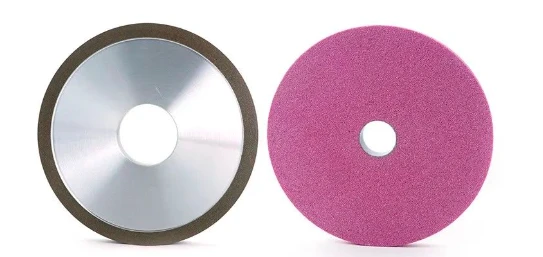
Ordinary grinding wheels primarily use corundum and silicon carbide as abrasives. Although these materials are hard, they are not as hard as super-hard grinding wheels. Super-hard grinding wheels use diamond or cubic boron nitride (CBN) as abrasives, which have a hardness far exceeding that of ordinary grinding wheels, making them especially suitable for processing high-hardness materials.
2. Grinding Action
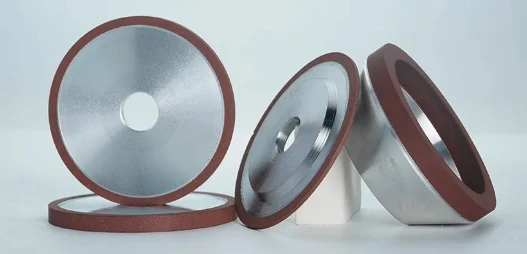
During the grinding process, super-hard grinding wheels, due to the high hardness and structural characteristics of their abrasives, can absorb more grinding heat. This characteristic significantly reduces the risk of thermal deformation and surface burn of the workpiece during processing. At the same time, the cutting angle and residual stress of super-hard grinding wheels are different from those of ordinary grinding wheels. These unique features give super-hard grinding wheels a clear advantage in processing high-precision parts, with higher machining accuracy and better surface quality.
3. Shape and Structure
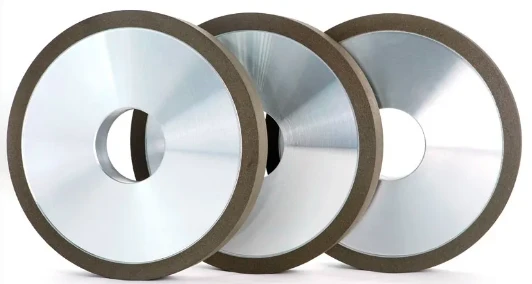
Ordinary grinding wheels are usually made by mixing abrasives and binders, and can be used for grinding from the inside out. In contrast, super-hard grinding wheels typically adopt a base body with an abrasive layer, with only a small front area being the grinding layer, and the rest being the base body, usually made of metal. This design is partly to save costs and partly to adjust the overall strength and weight of the grinding wheel according to needs.
4. Grinding Wheel Dressing
Dressing the grinding wheel is a key step to ensure the durability of the grinding wheel's performance and the stability of the grinding effect. It includes two main aspects: dressing for shape and dressing for sharpness. Dressing for shape mainly focuses on restoring the grinding wheel's shape and size precision, ensuring its accurate geometric form during long-term grinding. Dressing for sharpness is carried out when the grinding wheel is dull or clogged, and the grinding force decreases, aiming to improve the grinding wheel's sharpness and efficiency.
In the dressing process of ordinary grinding wheels, dressing for shape and sharpness can usually be carried out simultaneously, simplifying operations and saving time. However, for super-hard grinding wheels, the situation is different. Due to the material characteristics of super-hard grinding wheels, the processes of dressing for shape and sharpness need to be carried out separately. After dressing for shape, the sharpness of the super-hard grinding wheel may be affected, and then ordinary grinding wheels or oil stones need to be used for subsequent dressing for sharpness to restore its good grinding performance.
Of course, if the grinding operation does not require high precision, the grinding wheel can be directly dressed for sharpness to meet basic grinding needs. In general, the dressing of the grinding wheel is a meticulous and important process that needs to be flexibly selected according to the type of grinding wheel and grinding requirements.
5. Workpiece Material Processing
Super-hard grinding wheels are particularly suitable for processing high-hardness materials, such as hardened steel and hard alloys. However, for soft metals, such as untempered steel, the consumption rate of super-hard grinding wheels will increase, and their performance advantages will decrease. In addition, due to the high sharpness of super-hard grinding wheels, the surface roughness after grinding soft metals may be poor. Therefore, it is necessary to make a reasonable choice based on the material of the workpiece when selecting a grinding wheel.
6. Advantages and Disadvantages Comparison
The advantages of ordinary grinding wheels (corundum and silicon carbide grinding wheels) are easy to dress, high versatility, and the ability to grind both soft and hard metals; while the disadvantages are faster wear when grinding hard materials, larger size errors, and easy to produce residual stress and thermal deformation of workpieces. The advantages of super-hard grinding wheels (diamond and CBN grinding wheels) are less wear when grinding hard materials, longer dressing intervals, easy to obtain good size precision and lower thermal deformation of workpieces; but the disadvantages are not easy to dress into shape, requiring more operational experience, not suitable for processing soft metals, and lower versatility.
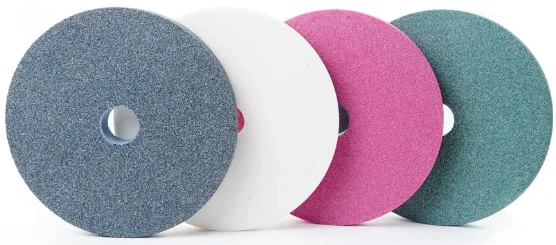
In summary, super-hard grinding wheels and ordinary grinding wheels have significant differences in abrasive hardness, grinding action, shape and structure, dressing methods, and workpiece material processing. In practical applications, it is necessary to make a reasonable choice based on specific needs and the material of the workpiece.


