


Choosing the suitable grinding wheels: Consider the detail factors(2)
Oct 29, 2024
After identifying your own needs, choosing the right grinding wheel becomes a key step to ensure processing quality and efficiency. The choice of grinding wheel involves several considerations, including the type of abrasive, type of bond, size of the grinding wheel, the hardness of the grinding wheel, the porosity (tissue number), and the concentration that needs to be considered for ultra-hard grinding wheels (diamond, CBN grinding wheels). Here is the analysis of these aspects:
abrasive type
• Corundum (brown, white, chromium, single crystal, SG, etc.) : suitable for general steel, cast iron and other common metal materials grinding, with good wear resistance and toughness.
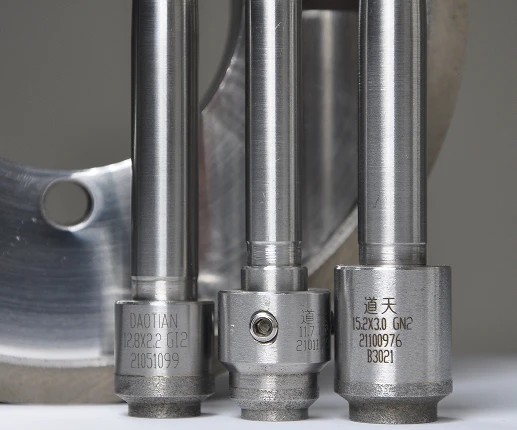
• Silicon carbide (black silicon carbide, green silicon carbide) : mainly used in the grinding of non-metallic materials, such as stone, ceramics, glass, etc., with high hardness and brittleness.
• Cubic boron nitride (CBN) : suitable for the grinding of high hardness and high toughness materials, such as hardened steel, high-speed steel, cemented carbide, etc., with extremely high wear resistance and thermal stability.
•Diamond: Suitable for the precision grinding of extremely hard and brittle materials, such as cemented carbide, ceramics, gems, etc., with the highest hardness and wear resistance.
Bond type
• Ceramic bond: suitable for high-speed grinding and heavy load grinding, good heat resistance, not easy to deform, but poor self-sharpening.
• Resin bond: suitable for fine grinding and polishing, good self-sharpening, easy to trim, but poor heat resistance.
• Metal bond: suitable for heavy load, high speed grinding, high strength, good durability, but high price.
• Rubber bond: suitable for the grinding of elastic materials and non-metallic materials, with good elasticity and shock absorption.
• Plating bond: extremely high grinding efficiency and precision. It is suitable for precision grinding and mirror grinding.
• Brazing bond: Suitable for high load, high speed grinding operations, can withstand large grinding pressure and impact. Good durability, high grinding efficiency.
Granularity
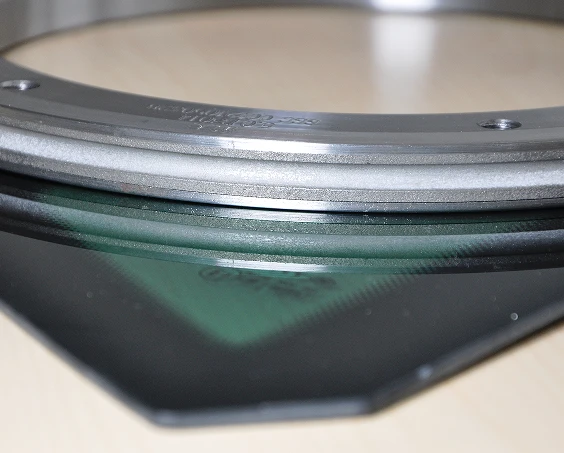
Grinding wheel granularity refers to the thickness of abrasive particles in the grinding wheel, which determines the contact area and cutting ability of abrasive and workpiece surface during grinding. The size of particle directly affects the grinding efficiency, the roughness of the machined surface and the service life of the grinding wheel.
•Coarse particle size: large abrasive particles, high grinding efficiency, but poor surface roughness.
• Medium size: suitable for general grinding, taking into account efficiency and surface roughness.
• Fine particle size: small abrasive particles, high surface finish after grinding, but low grinding efficiency.
The principle of granularity selection is as follows
According to the workpiece material selection:
• Soft and tough metals should be selected coarse-grained grinding wheels.
• Fine grained grinding wheels should be selected for hard and brittle metals.
Select according to grinding conditions:
• When grinding at high speed, an abrasive with a slightly larger particle size should be selected to maintain sufficient cutting capacity.
• When the contact area between the grinding wheel and the workpiece is large, the abrasive with slightly larger particle size should be selected to dissipate heat and reduce stress.
Select according to processing requirements:
• When the surface roughness is high, fine-grained grinding wheels should be selected.
• When high production efficiency is required, coarse-grained grinding wheels should be selected.
4. Hardness of grinding wheel
• Hardness grade: from soft to hard is divided into several grades, high hardness grinding wheel wear resistance, suitable for processing soft materials; The grinding wheel with low hardness has good self-sharpness and is suitable for processing hard materials.
• Selection principle: According to the hardness of the workpiece material and grinding requirements, select the appropriate hardness of the grinding wheel to ensure grinding efficiency and processing quality.
5. Porosity (tissue number)
• Porosity: represents the percentage of volume of porosity in the grinding wheel, which affects cooling, chip removal and durability of the grinding wheel during grinding.
• Organization number: the higher the porosity, the larger the organization number, the softer the grinding wheel, suitable for grinding the workpiece that is easy to heat and deformation; The smaller the tissue number, the tighter the grinding wheel, suitable for heavy load grinding.
6. Concentration (only for super hard grinding wheels)
• Concentration: Indicates the percentage of volume of abrasive in the grinding wheel, which affects the durability and grinding efficiency of the wheel.
• Selection principle: high concentration grinding wheel more abrasive, good durability, but the grinding force is large, easy to heat; Low concentration grinding wheel less abrasive, grinding force is small, less heat, but the durability is poor. Select the appropriate concentration according to the processing requirements and workpiece material.
7. Other considerations
• Shape and size: Select the right shape and size of the grinding wheel according to the type of grinding equipment and processing needs.
• Balance and accuracy: Ensure that the grinding wheel has good balance and accuracy when rotating at high speed to reduce vibration and noise and improve processing quality.


