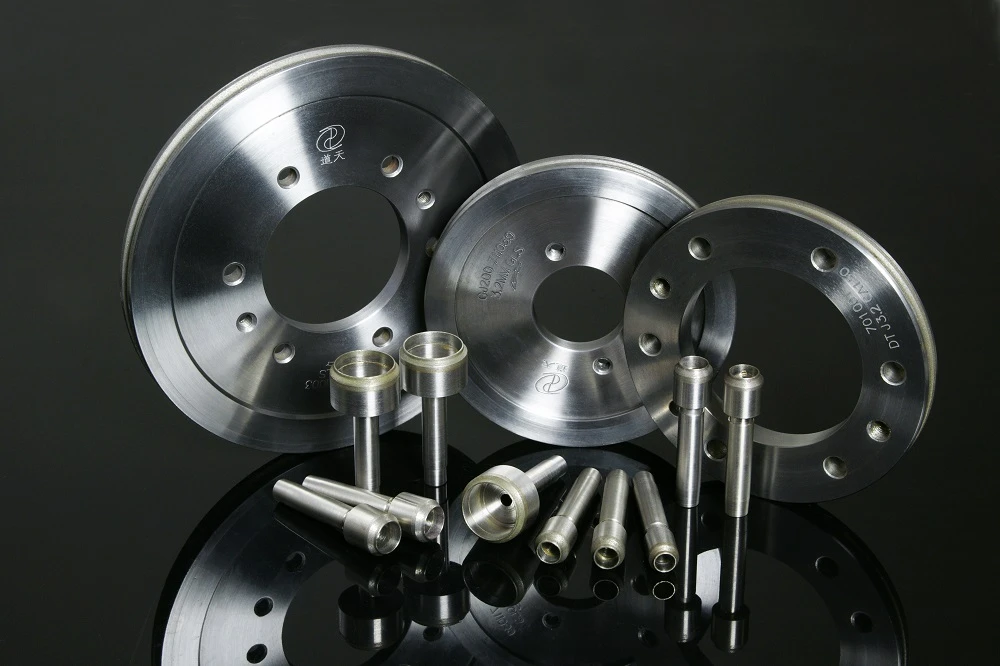
Grinding Wheels – Types, Purposes and Uses
Dec 13, 2022
Also known as abrasive wheels, grinding wheels are commonly used in workshops, factories and businesses . When attached to a handheld tool or a piece of machinery, grinding wheels are extremely effective in cutting, grinding, and polishing hard materials.
Different types of grinding wheels are used for various purposes. The type of grinding wheel that is chosen depends on the nature of the task at hand.
There are significant risks involved in using grinding wheels. If the incorrect type of wheel is used for a task, then the risk of a serious injury or even a fatality greatly increases. It is imperative that operators always choose the correct type of grinding wheel that is suited to the job. Let's consider what grinding wheels are and factors to consider when selecting them.
What is a Grinding Wheel?
Grinding wheels are discs that contain abrasive particles and grains that have been bonded together to form a wheel shape. Although the disc format is the most common shape, they can also be made in the shape of cones or cups.
Grinding wheels are attached to grinders or saws and rotated at high speeds for a variety of tasks. The abrasive grit and grains in the wheel are able to grind or cut through hard materials such as metal or steel. The abrasive grains are bonded together by either organic or inorganic substances.
Inorganic grinding wheels are fitted in a furnace and have a hard yet brittle structure that holds its form during precision cutting. These wheels usually require dressing before use to straighten the wheel or to form it into a desired shape.
Organic grinding wheels are cured at low temperatures, are shock resistant and do not require dressing. They are commonly used for cutting or grinding work that does not need to be precise.
They are categorised according to characteristics such as grit size, the bonding used, the abrasive material, the grade of the grinding wheel and the wheel's structure.
Types of Grinding Wheels
In general, six of them are commonly used:
Type 1 – Straight
Type 2 – Cylinder
Type 4 – Tapered
Type 6 – Straight cup
Type 12 – Dish
Type 13 – Saucer
Straight grinding wheels are usually used in bench grinders
Cylinder grinding wheels are used in horizontal or vertical spindle grinders to make flat surfaces
Tapered grinding wheels are wider in the centre with a surface that tapers outwards. These wheels are used to grind gear teeth or threads
Straight cup grinding wheels are fitted to cutter machines and used to sharpen tools or to make flat surfaces
Dish grinding wheels are thin with a flat centre that is raised outwards on the edge. These wheels are commonly used to cut openings such as slots
Saucer grinding wheels have a straight edge section and are used for twist mills and grinding cutters
Machines That Use Grinding Wheels
Handheld tools and standalone machinery typically use abrasive wheels. They include:
Angle grinders – also known as disc grinders or side grinders, – used to cut or polish hard materials
Belt grinders – mounted table top grinders with two different types of grinding wheels on each side, which can sharpen tools and are used for roughing or finishing
Cylindrical grinders – used to shape the exterior of rods, tubes or bearing races
Jig grinders – heavy machines used for complex grinding and cutting work
Table saws – sometimes called bench saws – are used for cutting wood
Chop saws – handheld tools used to make straight cuts in wood
Petrol cut-off saws – handheld tools used to cut concrete, steel, stone, asphalt and other materials
What to Consider When Choosing a Grinding Wheel
When choosing a grinding wheel there are a range of factors that need to be taken into consideration.
Operators must take the following points into account:
The nature of the material being ground
How involved the task is
What the required finish is
The level of accuracy required
The contact area
The speed of the wheel
If coolant is to be used
The power of the machine or spindle to be used
Safety Issues When Using Grinding Wheels
Severe injuries or even death can occur if the wrong wheel is used for a task. Not only is the operator at risk but so are any persons in the near vicinity.
Injuries can be caused as a result of flying debris caused by abrasive particles, metal or wood fragments or broken pieces of the wheel. Loose clothing or long hair can be caught up the wheel to cause what is known as drawing-in injuries.
The dust, fumes and particles emitted by the work itself can be hazardous to the lungs and respiratory system. Over time, the vibrations and the noise that they emit can cause both nerve damage and hearing loss.