


Influence of grinding wheel dressing speed on grinding
Nov 01, 2024
In the field of precision manufacturing and machining, grinding as a crucial process, its quality and efficiency are directly related to the performance of the final product and production costs. As the core tool in the grinding process, the performance of the grinding wheel directly affects the grinding effect. The grinding wheel dressing speed, as one of the key parameters to control the performance of grinding wheel, its influence on the grinding process cannot be ignored.
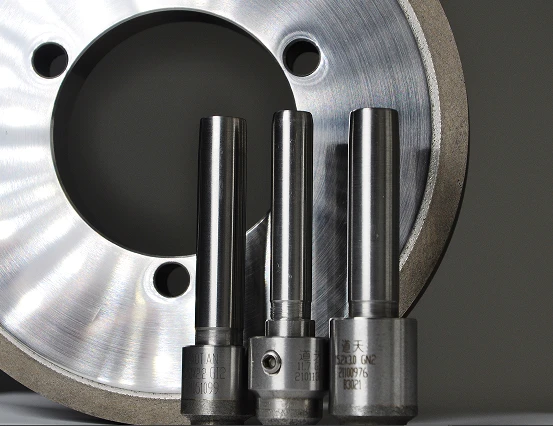
Grinding quality and surface roughness: The grinding wheel dressing speed is too high, which may lead to the grinding edge of the grinding wheel surface particle is too coarse, and it is easy to produce large cutting force and vibration during grinding, thus affecting the grinding quality and increasing the surface roughness. On the contrary, the dressing speed is too low, it may lead to the abrasive cutting edge is not sharp enough, grinding efficiency is low, and the surface of the grinding wheel is easy to form chip nodules, which will also affect the grinding quality and surface roughness.
Grinding wheel service life: Proper dressing speed can extend the service life of the grinding wheel, because dressing can remove the passivation of the grinding wheel surface, so that the grinding wheel remains sharp. However, excessive dressing speed will aggravate the wear of the grinding wheel and shorten its service life, because high-speed dressing may lead to premature loss of abrasive particles or damage to the grinding wheel matrix.
Cutting force of grinding wheel: Properly increasing the dressing speed of grinding wheel can reduce the cutting force of grinding wheel and improve cutting efficiency. However, dressing speed too fast can lead to a sharp drop in cutting force, as some of the abrasive particles may not be sufficiently trimmed, resulting in an un-sharp cutting edge. On the contrary, too slow dressing speed may lead to too much cutting force, because the abrasive cutting edge is too smooth to effectively cut into the workpiece.


