


Eleven feed forms of grinding wheel
Jul 12, 2024
In modern industrial manufacturing, grinding technology plays an extremely important role. Whether it is rough machining or precision machining, the fine processing of the workpiece surface is indispensable. However, grinding is not a single processing method but includes a variety of different feed forms and technologies. Each feed form has its unique characteristics and applicable scenarios, providing a variety of choices for workpiece processing. According to the classification of feed forms, grinding methods mainly include the following:
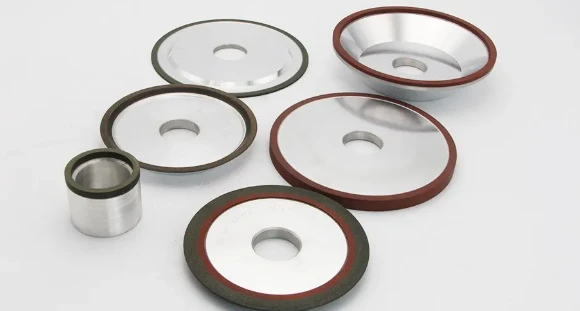
Traverse Grinding (also known as plunge grinding): The grinding wheel cuts into the workpiece surface at a small inclination angle and removes the rough part of the workpiece surface through continuous cutting.
Longitudinal Grinding: The workpiece rotates along its axial direction, while the grinding wheel reciprocates in a direction perpendicular to the workpiece's axis, achieving surface grinding through this motion.
Slow Feed Grinding: The feed speed during the grinding process is low, but the depth of each cut is large, suitable for grinding of high-precision, high-hardness materials.
No-Feed Grinding (Constant Pressure Grinding): In the grinding process, the grinding wheel applies a constant pressure to the workpiece, and the grinding effect is controlled by adjusting grinding parameters, suitable for workpieces with extremely high surface quality requirements.
Reciprocating Feed Grinding: The grinding wheel reciprocates during the grinding process, suitable for grinding of surfaces such as planes and grooves.
Helical Feed Grinding: The grinding wheel advances in a helical trajectory during the grinding process, suitable for grinding of complex surfaces or workpieces with special requirements.
Vibration Feed Grinding: During the grinding process, the grinding wheel generates slight vibrations through a vibration device to improve grinding effects and surface quality.
Cycloidal Feed Grinding: The grinding wheel advances in a cycloidal trajectory during the grinding process, commonly used for high-precision grinding of complex surfaces.
Elliptical Feed Grinding: The grinding wheel advances in an elliptical trajectory, suitable for processing workpieces with special surface requirements.
Rotary Feed Grinding: In the grinding process, in addition to its own rotation, the workpiece also undergoes additional rotational feed through some mechanism to improve grinding effects and processing efficiency.
Oscillating Grinding: In this grinding method, the grinding tool (such as a grinding wheel) oscillates during the grinding process to improve the grinding effect and the uniformity of the workpiece surface. This technology is commonly used for processing workpieces with complex shapes or requiring high-precision surfaces.
By systematically classifying and comparing grinding technologies under different feed forms, we have a more comprehensive understanding of the diverse applications and important roles of grinding in industrial processing. Whether pursuing high precision, high efficiency, or having strict requirements for the surface quality of special workpieces, suitable solutions can be found in various grinding technologies.


