Properties and characteristics of diamond
Sep 04, 2024
Both diamond and graphite are carbon-based crystals, but their properties differ significantly due to their different structures.
In the diamond structure, carbon atoms are in a tetravalent state. The fundamental characteristic of the diamond structure is that each carbon atom is bonded to four neighboring carbon atoms in tetrahedral directions, which contributes to diamond's great hardness.
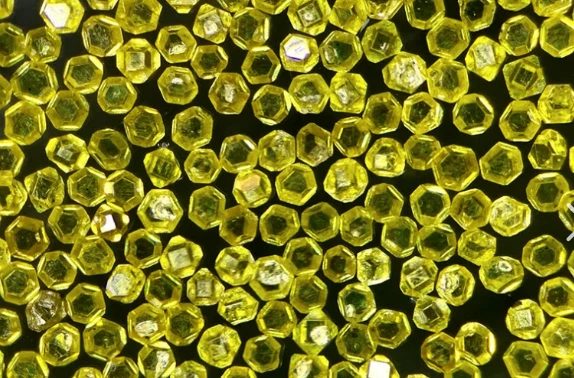
Diamonds exhibit a variety of morphologies, which is invaluable for gaining deeper insight into the conditions and processes of diamond crystal formation.
The hardness of diamond, from strongest to weakest, is in the order of octahedron, dodecahedron, and hexahedron. Well-developed hexahedral and octahedral polyhedral forms also exhibit excellent strength.
Hardness: Diamond is the hardest substance found on Earth. In the Mohs scale of hardness, where ten minerals serve as benchmarks to determine values from 1 to 10, diamond's hardness is rated at the maximum of 10. Diamond's friction coefficient in air is 0.1, and its wear varies significantly based on the method of friction.
Diamond possesses hydrophobic and lipophilic properties, which must be taken into special consideration during diamond purification to avoid loss. On the other hand, using an emulsion as the drilling fluid in drilling can protect diamond bits and improve their performance.