


Useful tips in different grinding processes
Jul 30, 2024
Grinding technology, as a precision machining method, is not only widely used in the field of metal processing, but also involves the fine processing of ceramics, glass and other materials. Different grinding processes have their own unique requirements for the selection and use of grinding wheels. This article will explore several common grinding processes in depth, and share the corresponding wheel use tips to help you better understanding and apply grinding technology.
Firstly, the diversity of grinding process
There are many kinds of grinding processes, in addition to the common cylindrical grinding, internal grinding and surface grinding, there are many forms of shape grinding, tool grinding and high-speed grinding. Each grinding method has its own unique application scenarios and grinding requirements.
Secondly, the use of grinding wheels in different grinding processes
Cylindrical grinding
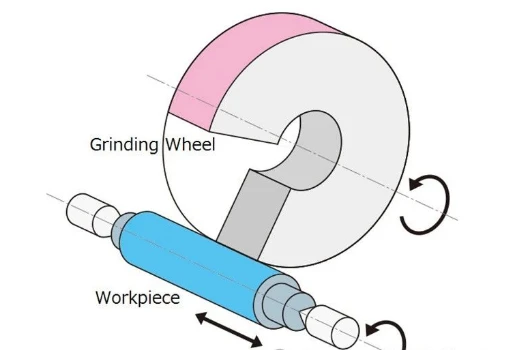
In cylindrical grinding, the hardness and granularity of grinding wheel are the key factors that affect the grinding effect. For materials with higher hardness, a grinding wheel with softer hardness should be selected. When the abrasive is blunted, it can fall off in time to expose new abrasive and ensure the sharpness of the grinding wheel. On the contrary, a harder grinding wheel is used to ensure that the abrasive particles fall off after full grinding, ensure the service life of the grinding wheel. For higher surface roughness, a grinding wheel with finer grain size should be selected. At the same time, maintaining a stable grinding pressure and speed is also an important part of ensuring the quality of grinding.
Internal grinding
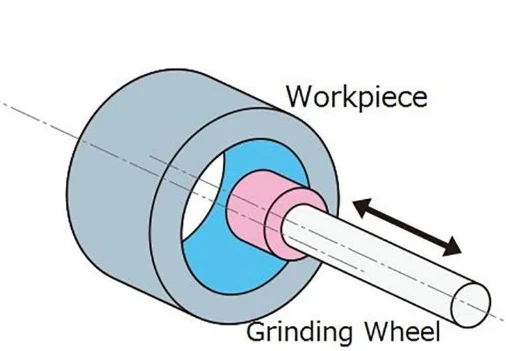
Due to the limited operating space of internal grinding wheel, the choice of grinding wheel and the use of skills are more demanding. A grinding wheel with good wear resistance and high thermal stability should be selected to ensure a stable grinding effect in a limited operating space. In addition, controlling the grinding depth and feed speed to avoid workpiece deformation or wheel damage is also the key to internal grinding.
Flat surface grinding
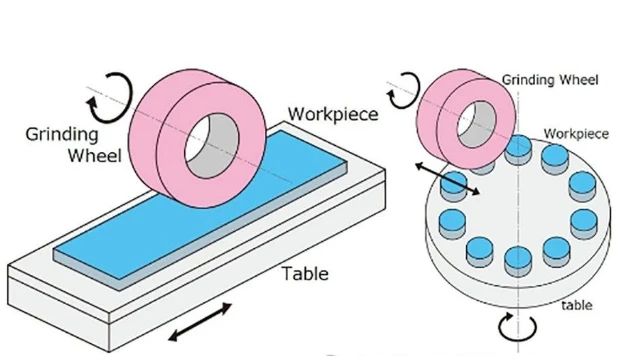
In surface grinding, the smooth operation of the grinding wheel is crucial to obtain a high-quality surface. Therefore, the grinding wheel with good balance should be selected and its balance state should be checked regularly. At the same time, according to the workpiece flatness and roughness requirements, select the appropriate grinding wheel size and hardness. Maintaining uniform grinding pressure and speed helps to obtain the desired flat effect.
Profile grinding
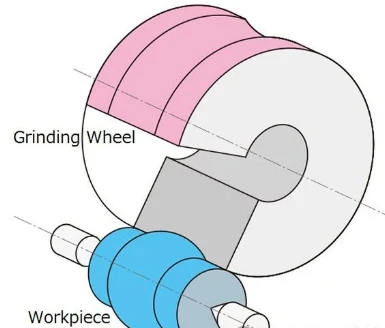
Form grinding is mainly used for machining workpieces with complex shapes. In this process, the shape and precision of the grinding wheel have a decisive influence on the forming quality of the workpiece. Therefore, the grinding wheel with high shape accuracy and good wear resistance should be selected, and the appropriate shape of the grinding wheel should be designed according to the shape of the workpiece. At the same time, the grinding depth and feed speed are controlled to ensure the accuracy and precision of the workpiece shape.
Cutter grinding
Tool grinding is mainly used for the manufacture and repair of tools such as tools and molds. Because these tools have high requirements for precision and wear resistance, high-quality and high-precision grinding wheels should be selected. In the grinding process, the grinding parameters should be strictly controlled to ensure that the sharpness and accuracy of the tool meet the requirements of use.
High-speed grinding
High speed grinding is widely used in modern machining field because of its high efficiency and high precision. In this process, the choice of grinding wheel is crucial, and it is necessary to choose a grinding wheel with high thermal stability, high wear resistance and high strength to meet the challenges brought by high-speed rotation and high temperature environment. At the same time, in order to ensure grinding quality and safety, it is necessary to strictly control grinding parameters, such as grinding speed, feed speed and grinding depth, to prevent excessive wear of the grinding wheel and overheating of the workpiece. The application of high-speed grinding technology has greatly improved the processing efficiency and injected new vitality into the development of modern manufacturing industry.
Thirdly, grinding wheel use skills summary
In summary, different grinding processes have different requirements for the use of grinding wheels. When selecting the grinding wheel, the workpiece material, shape, processing requirements and the hardness, particle size and wear resistance of the grinding wheel should be considered comprehensively. In the grinding process, to maintain a stable grinding pressure and speed, pay attention to the balance and accuracy of the grinding wheel, in order to obtain high quality grinding effect.


