


Judging and repairing strategies of grinding wheel damage
Aug 05, 2024
During the use of the grinding wheel, it is a comprehensive consideration process to determine whether the degree of grinding damage will affect the grinding process, and then decide whether to repair the shape, sharpness or the grinding wheel. This process involves many aspects, including the type of grinding wheel, grinding conditions, grinding effects and the physical state of the grinding wheel itself. Here is a detailed breakdown of these aspects:
First of all, different types of grinding wheels have different characteristics and service life. For example, superhard grinding wheels have high hardness and wear resistance, but the degree of grinding damage may be different from other types of general grinding wheels. Therefore, when judging whether the grinding wheel needs to be repaired or replaced, it is necessary to first understand its type and characteristics.
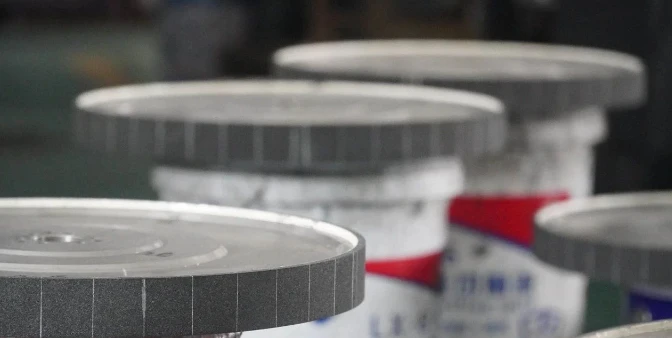
Secondly, grinding conditions have a great impact on the degree of damage to the grinding wheel. Factors such as pressure, speed, and coolant use during grinding can cause abrasive particles to wear or fall off the grinding wheel surface. If the grinding conditions are not properly set, the grinding wheel is easy to be damaged in a short time, which will affect the grinding effect.
In addition, grinding effect is also an important basis for judging the degree of grinding wheel damage. When the grinding wheel is damaged, its grinding efficiency, surface roughness and machining accuracy may be affected. For example, if the surface of the grinding wheel is uneven or the abrasive particles fall off too much, it will lead to an increase in the surface roughness of the processed workpiece, and even defects such as scratches or burns.
Finally, observing the physical state of the grinding wheel itself is also the key to judging whether it needs to be repaired or replaced. The degree of wear, crack and deformation of the grinding wheel can be detected by the naked eye or professional tools. For example, when the edge of the grinding wheel is obviously worn or uneven, shape repair is needed; when a large number of abrasive particles fall off or become blunt, it is necessary to repair the sharpness; when the grinding wheel has serious cracks or deformation, it is necessary to consider replacing the grinding wheel.
To sum up, judging whether the degree of grinding damage of the grinding wheel will affect the grinding process needs to be comprehensively considered from many aspects. In actual operation, the corresponding testing standards and repair measures can be formulated according to the specific circumstances to ensure the normal use of the grinding wheel and the quality of the grinding process.


